LIVE-ACTION · 2013
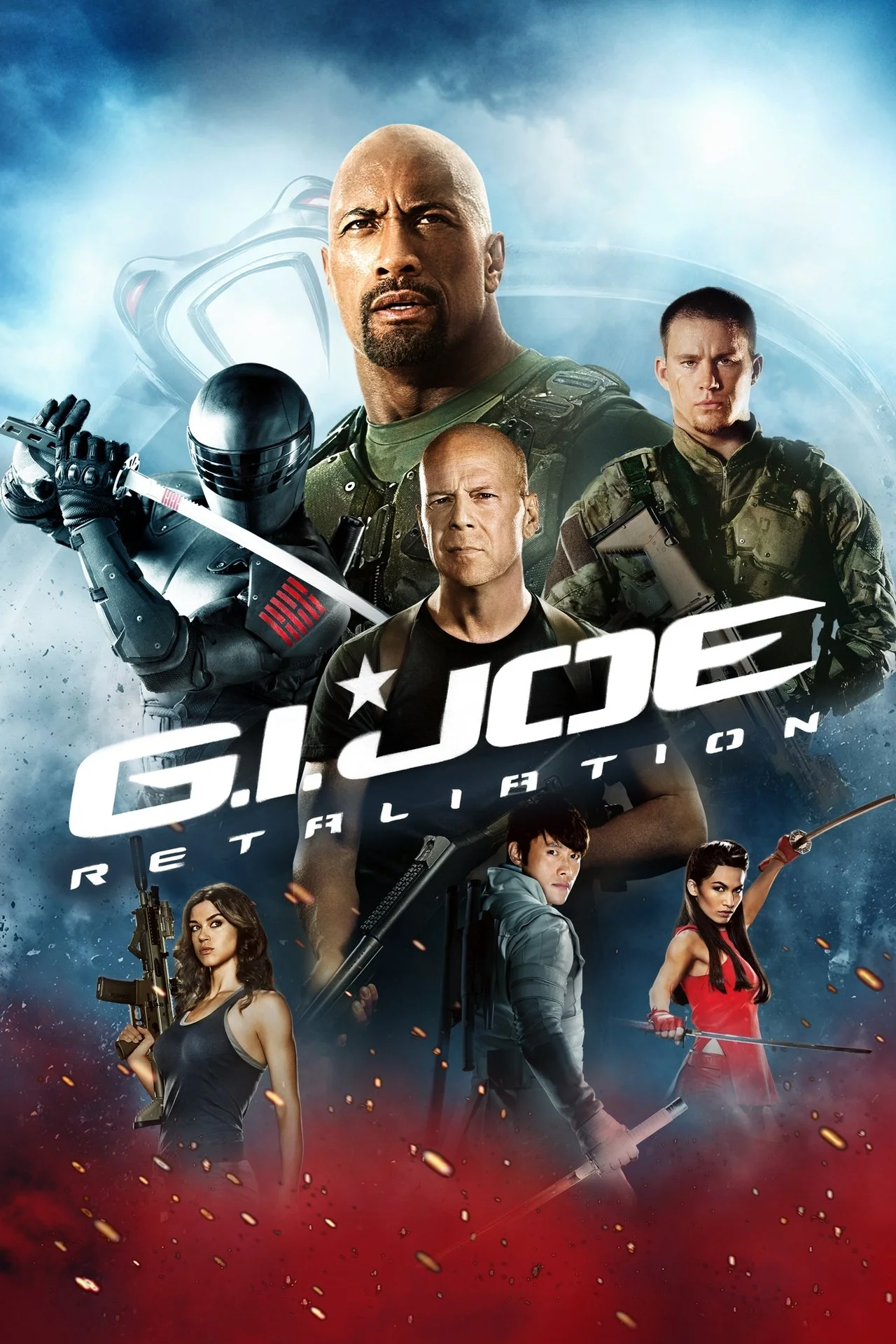
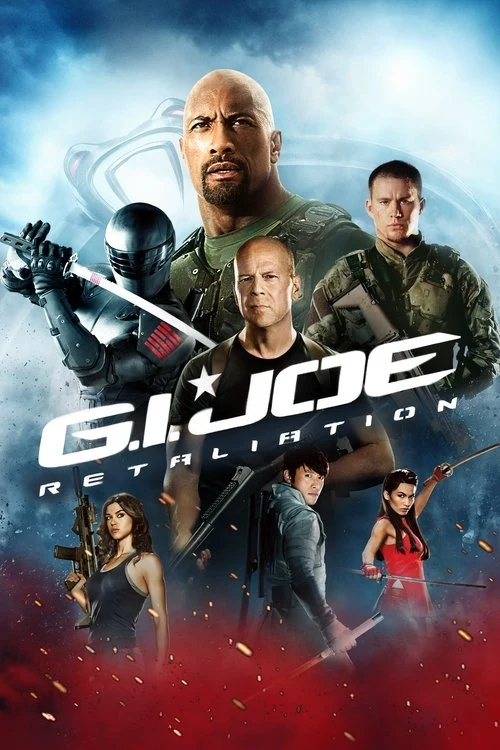
G.I. Joe: Retaliation
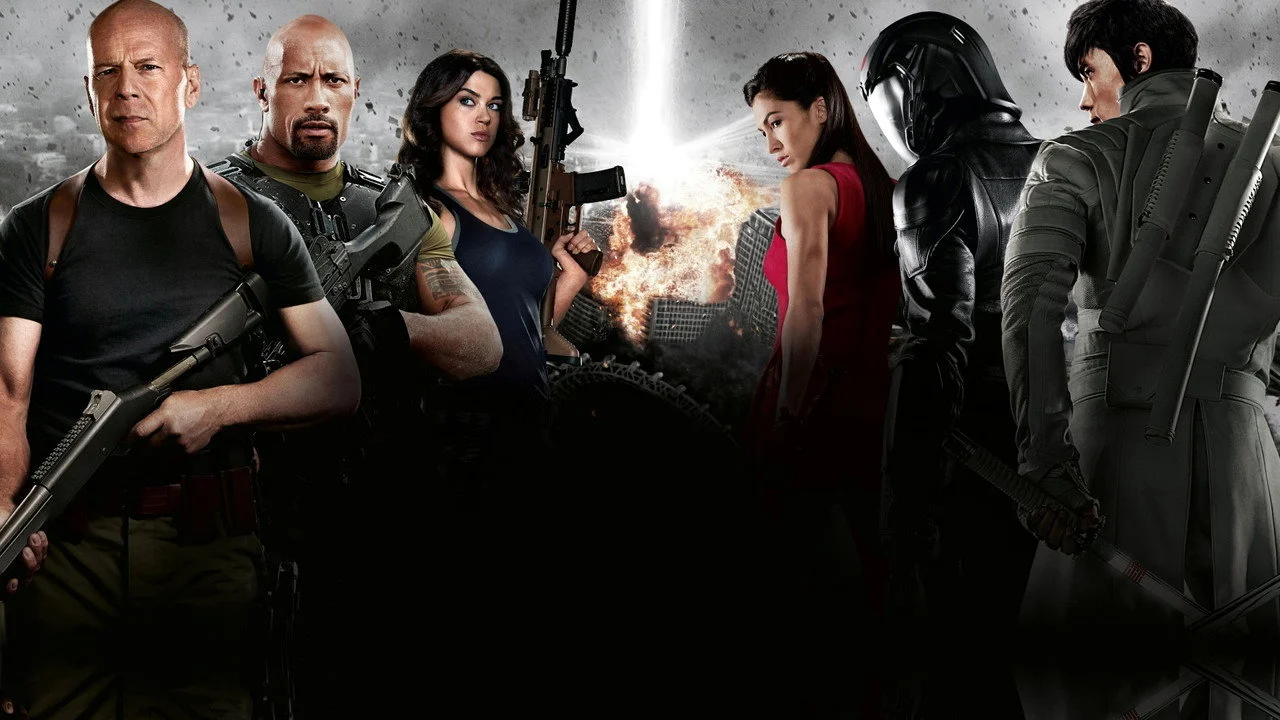
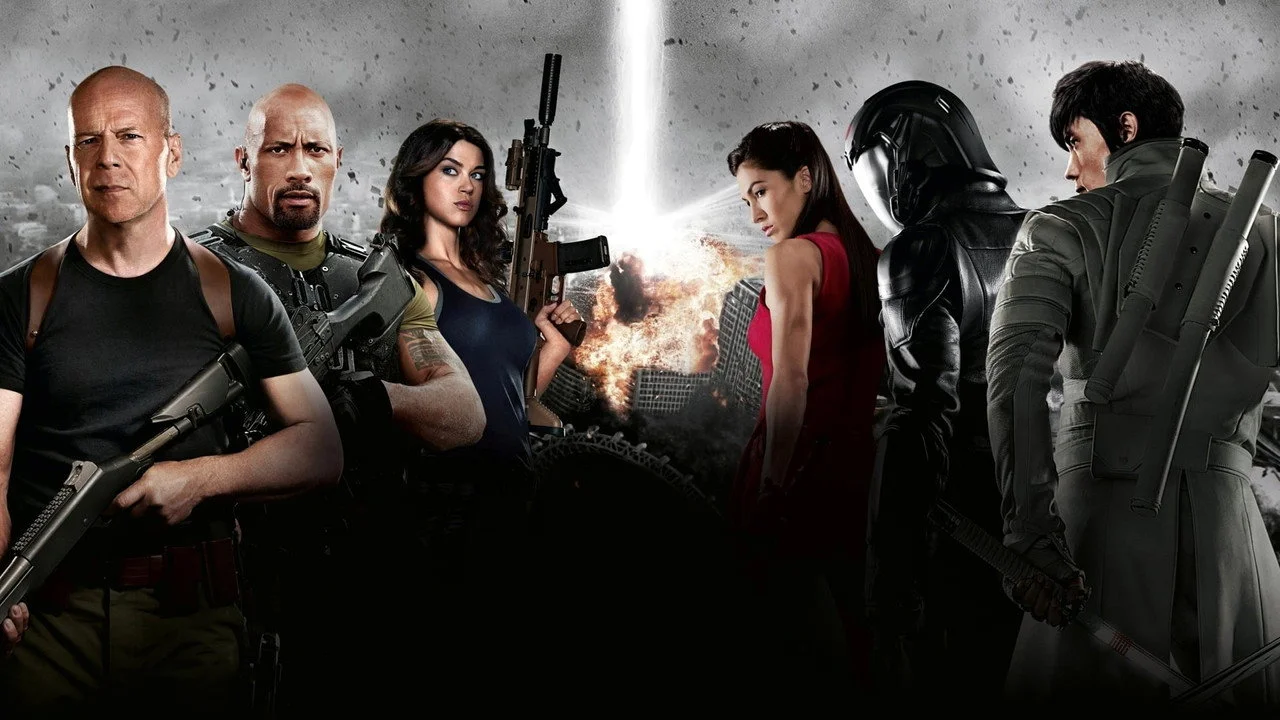
Cobra has the White House. The Joes are marked for death.
- DirectorJon M. Chu
- ReleasedMarch 28, 2013
- Runtime110 min
- Box office$375.7M
The Film
A harder, leaner soft reboot that framed the Joes for treason, killed its original star in the first act, survived a nine-month delay and a top-secret reshoot, and delivered a nine-minute Himalayan cliff duel that critics who hated everything else still call the best action the franchise ever staged.
The Story

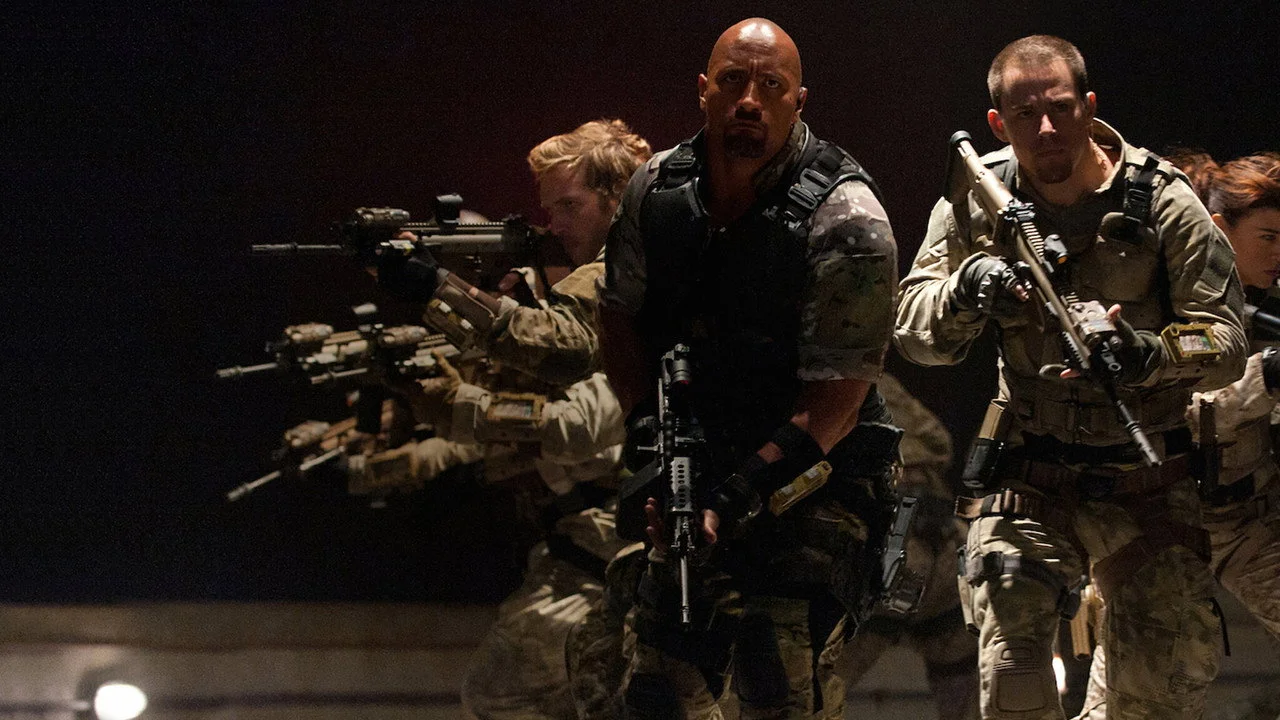
With the Cobra operative Zartan still impersonating the President of the United States behind a perfect nanomite disguise, Cobra moves to seize the world. In a single night, the disguised President orders an airstrike that frames the G.I. Joe team for treason and wipes out almost all of them, killing their field leader Duke. Only three survive: Roadblock, Flint and Lady Jaye, who dive into a well as the missiles fall.
Convinced the impostor in the Oval Office is the real threat, the survivors go underground and seek out the one man who can help them strike back: General Joseph Colton, the original G.I. Joe, living in quiet retirement. Half a world away, the Arashikage ninja Storm Shadow breaks the imprisoned Cobra Commander out of an underground German prison, while Snake Eyes and his apprentice Jinx are dispatched by the Blind Master to capture Storm Shadow and uncover the truth about a long-ago murder.
Cobra Commander's endgame is Project Zeus, a constellation of orbital kinetic-bombardment weapons that drop tungsten rods from space with the force of a meteor. He lures the world's nuclear powers to a summit, tricks them into disarming, levels central London as a demonstration, and demands the planet kneel. The decimated Joes, armed by Colton and joined by a defecting Storm Shadow, race to expose the impostor President, rescue the real one, and shut Zeus down before Cobra rules everything.
Cast and Characters
G.I. Joe


Cobra
A Reboot Built to Save the Franchise

2009's G.I. Joe: The Rise of Cobra had made money but taken a critical beating, and Paramount wanted a do-over that would not alienate the first film's audience. The studio, with Hasbro's Brian Goldner and producer Lorenzo di Bonaventura, set out to build what director Jon M. Chu called a reboot that also served as a sequel: a harder, more grounded, more militaristic film that quietly cleared most of the original cast off the board.
Hasbro hired the Zombieland writing team of Rhett Reese and Paul Wernick, and in February 2011 Paramount handed the chair not to returning director Stephen Sommers but to Jon M. Chu, a young filmmaker known for the Step Up dance pictures and the Justin Bieber concert documentary. It was a counterintuitive choice that paid off: Chu was a lifelong G.I. Joe fan, comfortable with 3D, and his dance background gave him an unusual instinct for choreographed action. The budget landed somewhere between 130 and 155 million dollars, with MGM and David Ellison's Skydance each taking a 25 percent equity stake.
Principal photography began in Louisiana in August 2011. The production was marked by tragedy when crew member Mike Huber was killed on a New Orleans soundstage in November 2011 after a scissor lift fell on him. Fort Pike, Louisiana stood in for Fort Sumter in the film's climax, and a NASA facility once used to build Space Shuttle fuel tanks would become the stage for its most famous scene.
The Rock Takes Command

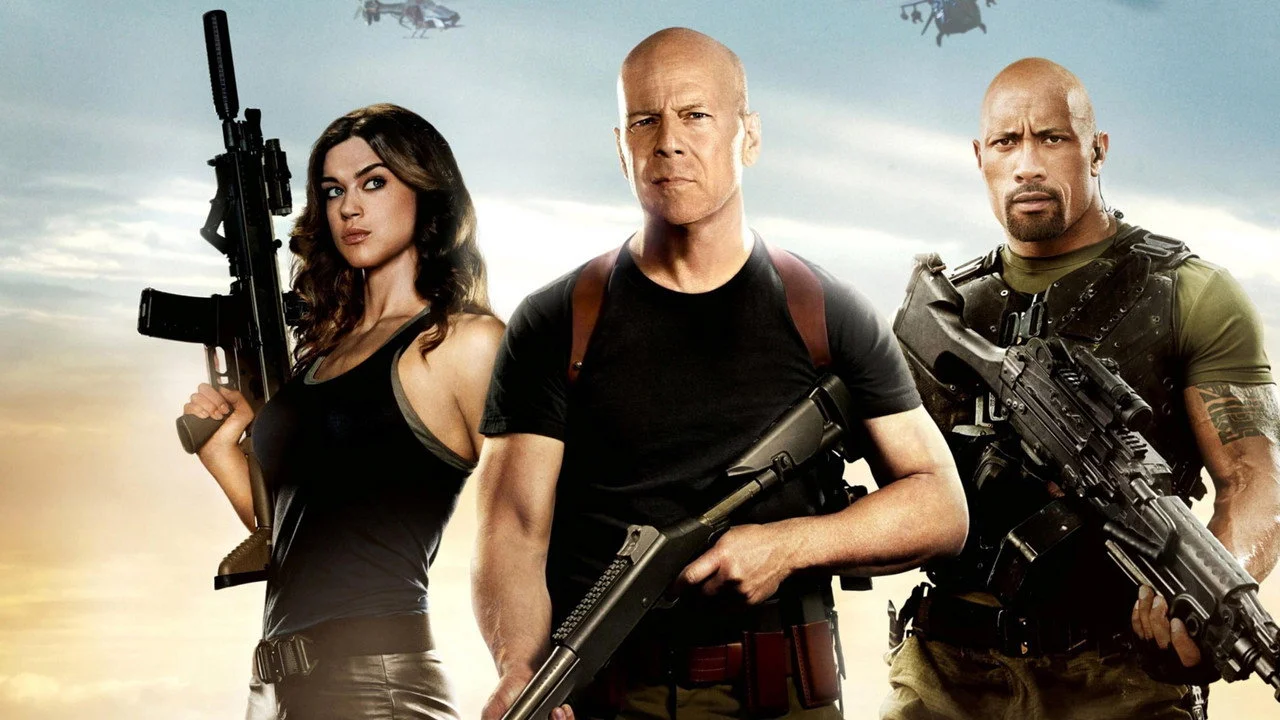
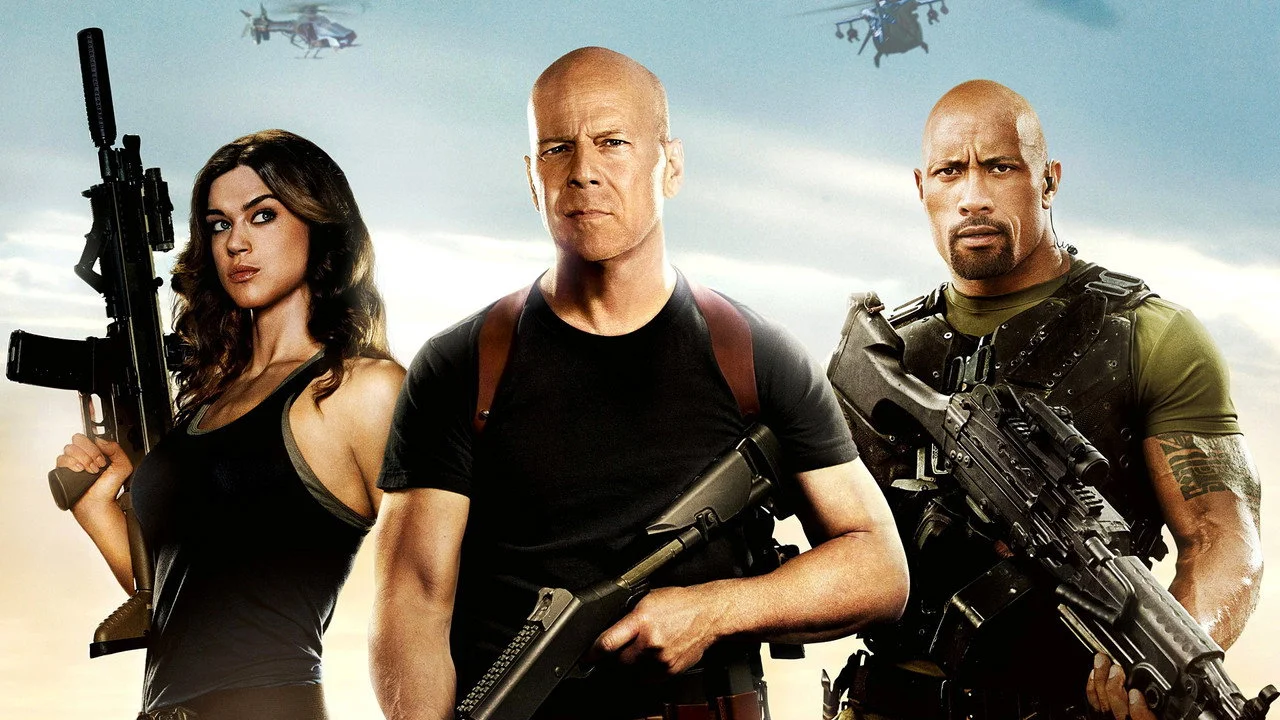
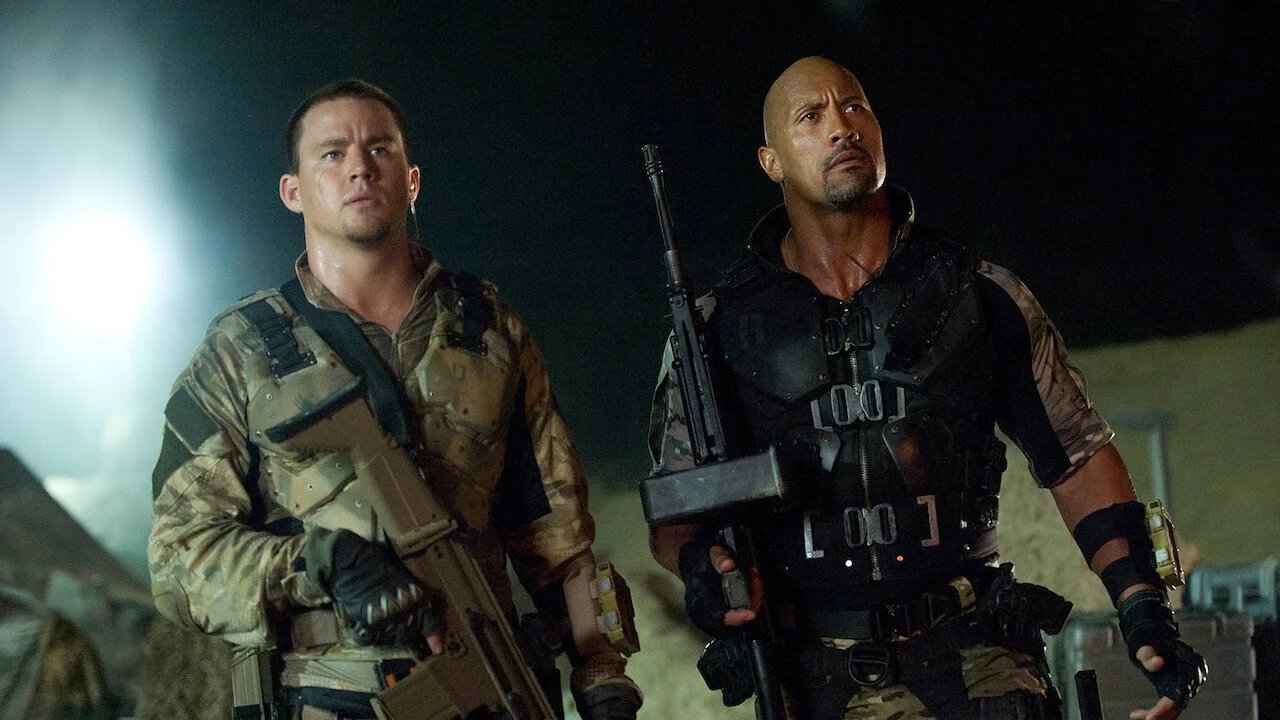
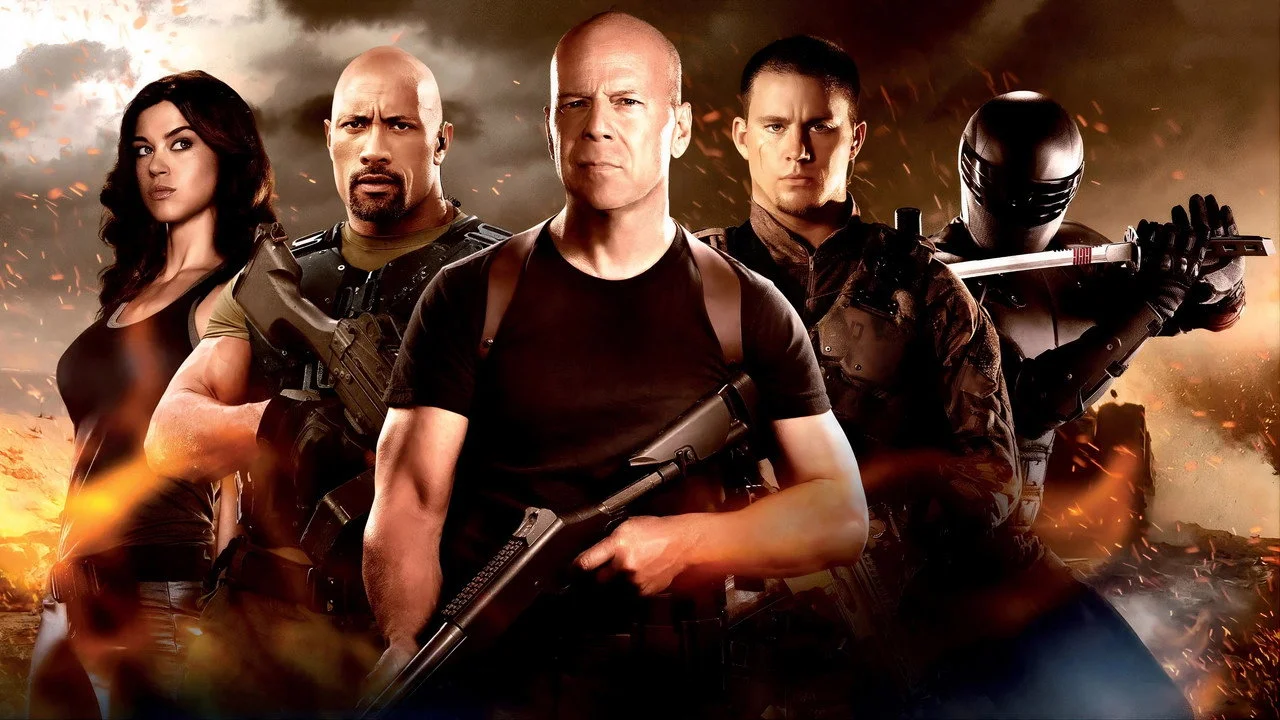
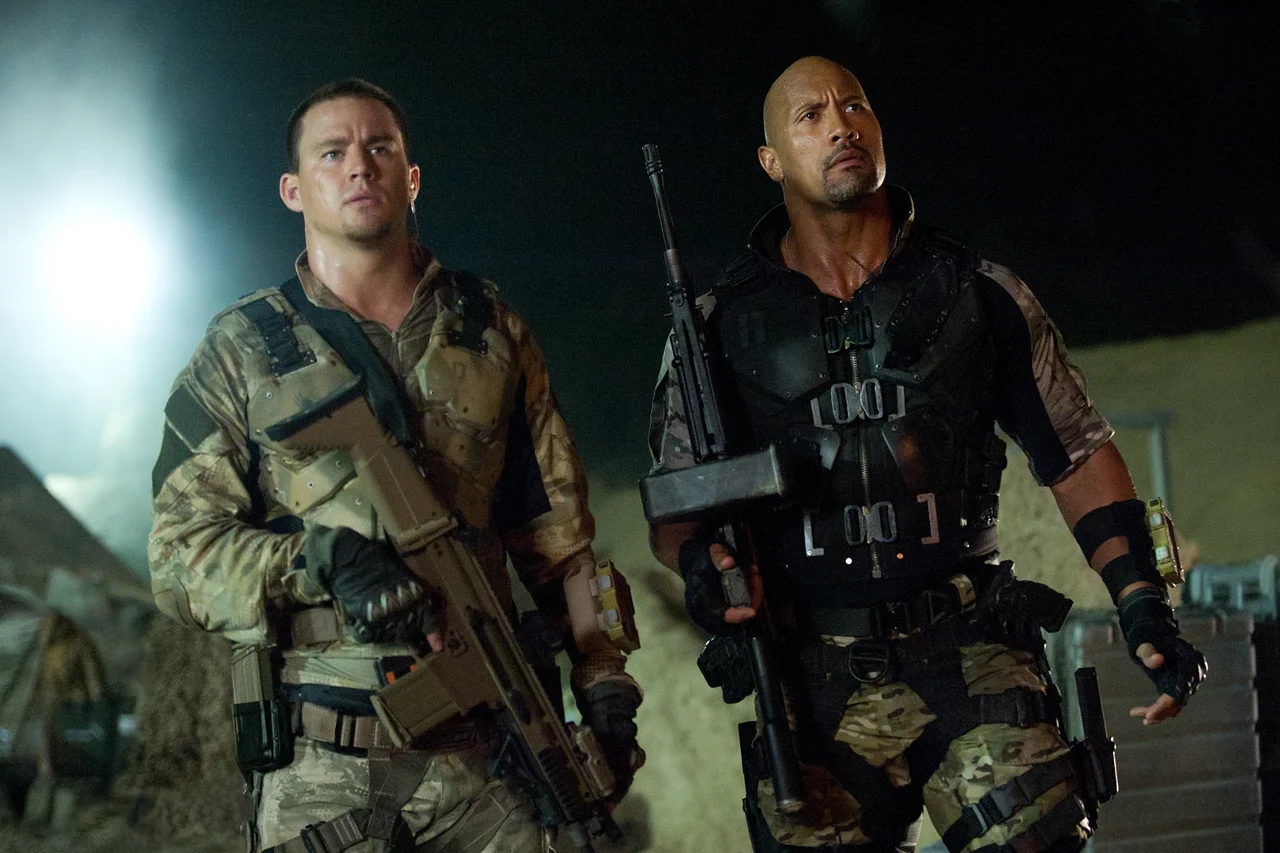
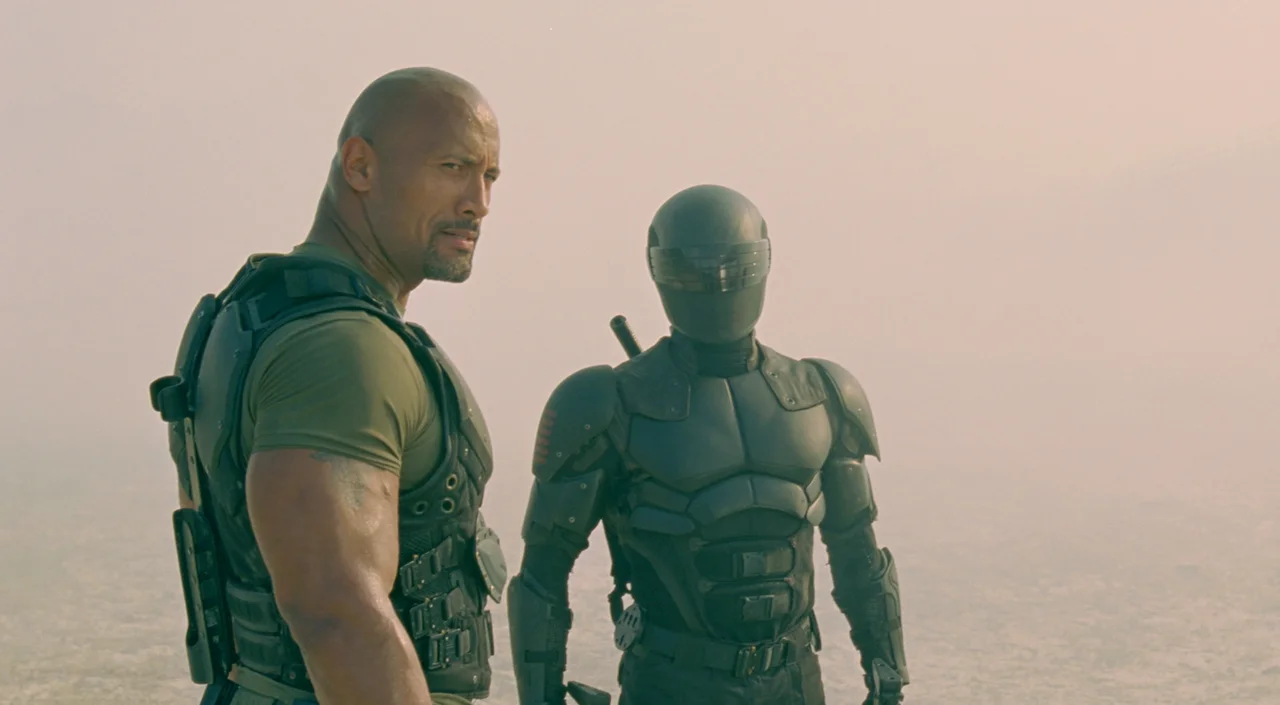
The single biggest change was the lead. Where the first film centred on Channing Tatum's Duke, Retaliation handed the franchise to Dwayne Johnson as Roadblock, the team's heavy machine gunner, cast in June 2011 as the new marquee anchor. Johnson was on his way to becoming the most bankable star in the world, and Paramount paired him with another piece of stunt casting, Bruce Willis as the original G.I. Joe, to give the soft reboot two fresh, recognisable faces.
The strategy was deliberate: rebuild the brand around a bigger, harder star and a more serious tone, and let the new Roadblock carry the series forward. By the finale he wields an M1911 pistol said to have belonged to General Patton, handed to him by Colton, firing a single shot in tribute to the fallen Joes. It was a clean passing of the torch from the first film's teen-movie energy to a muscular action vehicle built on Johnson's shoulders.
Killing Duke
The most shocking creative choice arrives in the first act: Channing Tatum's Duke, the hero of the first film, is killed in the opening airstrike. For longtime fans it echoed the franchise's oldest taboo, the death of Duke that the 1987 animated movie had famously walked back into a coma after a child backlash.
The decision had an unusual origin. Tatum, who has been candid that he did not enjoy making the films, said he actively asked to be killed off early. In a later interview he admitted, with a grin, that he 'obviously just didn't want to be in that one either.' The filmmakers obliged, staging Duke's death within the first act and shifting the whole film onto Roadblock. What the studio did not anticipate was how badly that would test.
The Nine-Month Delay
In May 2012, barely five weeks before its June 29 release and after a full marketing campaign had already run, Paramount stunned the industry by yanking G.I. Joe: Retaliation off the schedule and pushing it nine months to March 2013. The official reason was a post-production conversion to 3D to chase international box office. The real story, broken by Nikki Finke at Deadline, was more interesting.
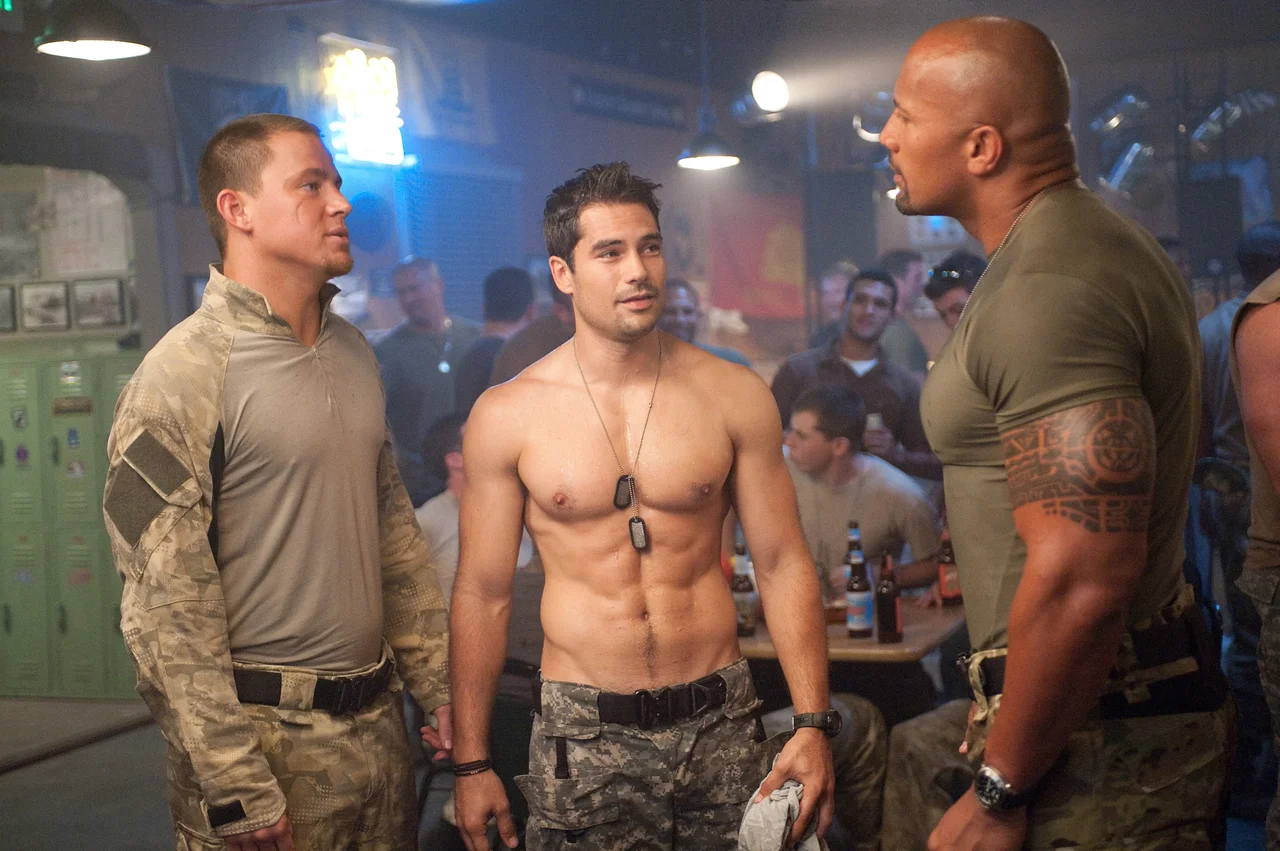
Test screenings had come back, in the studio's own words, mediocre to bad. Audiences had two complaints: the film was not in 3D, and they were furious that Duke and Roadblock were killed apart before the two stars had any time to build a friendship. As one Paramount insider put it to Deadline, 'they didn't like the fact that Channing and The Rock really didn't have any time to develop a friendship before Channing died.' Tatum, a nobody when the first film shot, had since become a genuine star on the back of 21 Jump Street and Magic Mike, and the one bright spot in testing was his chemistry with Johnson. A source admitted the truth bluntly: 'The 3D is an excuse as to not reveal the Tatum of it all.'
So Paramount went back and shot roughly another week with Tatum to build the Duke and Roadblock friendship before the death, which made the film 'play much better.' It did not, however, save Duke; he still dies early in the released cut. The delay also conveniently spared Tatum from competing with himself, since his film Magic Mike was dated the very same June weekend. Director Jon M. Chu, who had been kept on a tight leash, was described as shellshocked by the move.
The 3D was real, but it was also cover: the film had tested poorly, and the studio quietly reshot a week with Channing Tatum to fix the one thing audiences loved before killing him off.
The Himalayan Mountain Duel

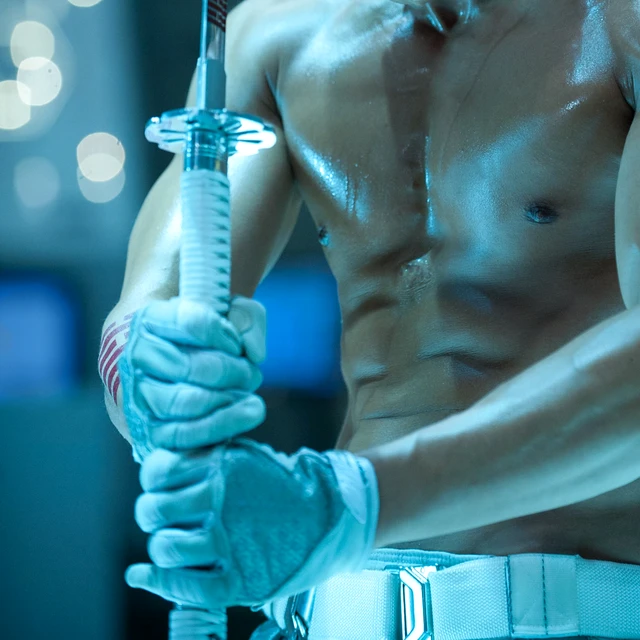
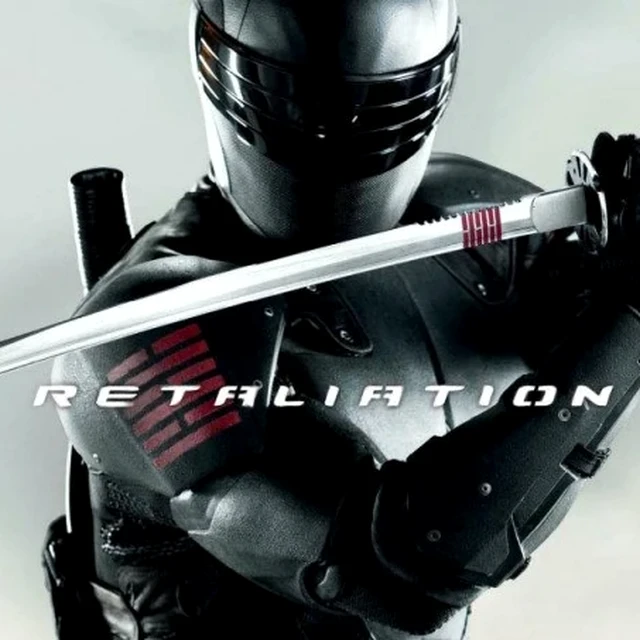
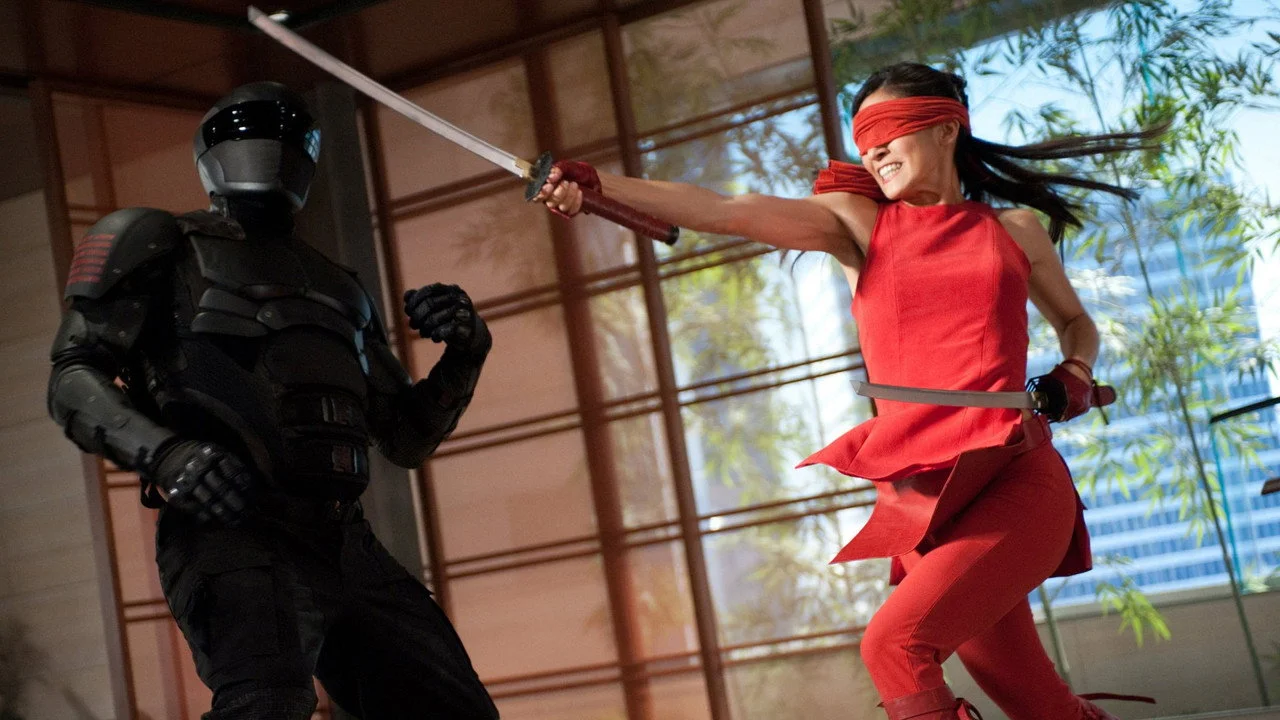
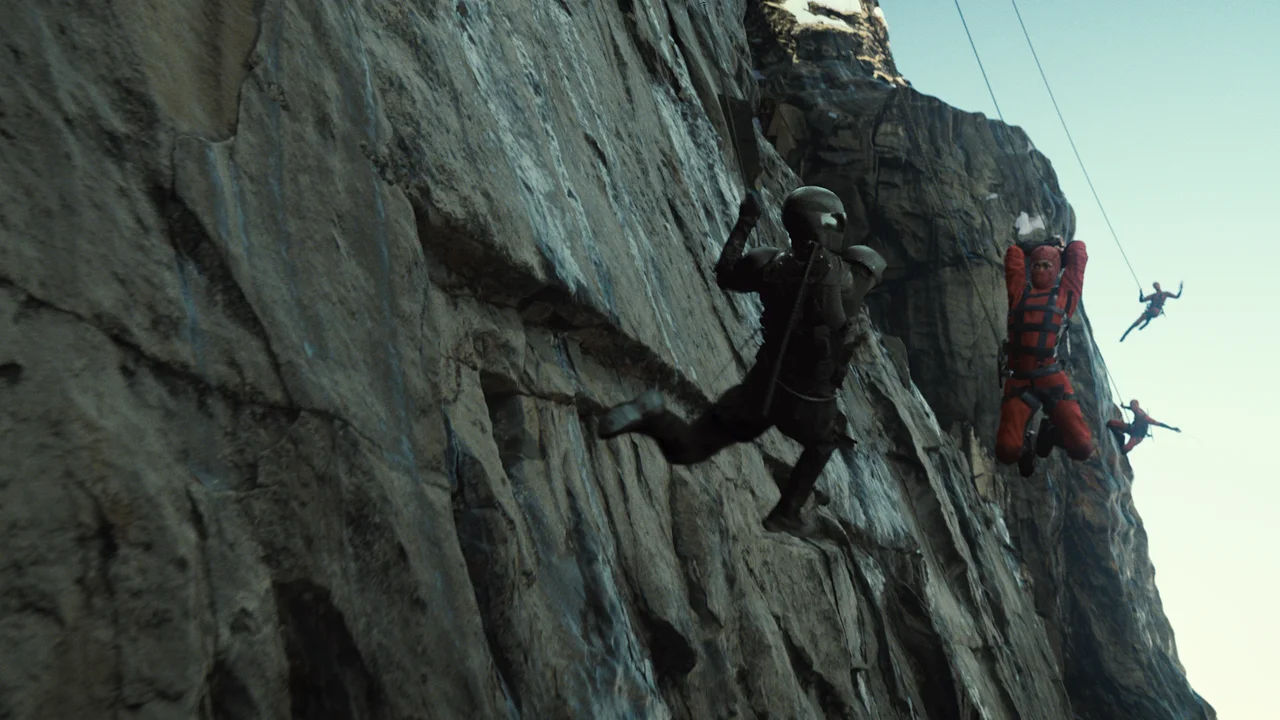
If Retaliation is remembered for one thing, it is the nine-minute, almost dialogue-free ninja battle waged on the sheer face of a Himalayan mountain. Snake Eyes and Jinx extract a captured Storm Shadow down a vertical cliff while Storm Shadow's red ninjas swing in on ropes and zip-lines, sword-fighting in mid-air as an avalanche bears down. Critics who savaged the rest of the film singled it out as one of the best action sequences of its year.
It began, improbably, with furniture and toys. Jon M. Chu blocked the entire sequence in a room using couches, chairs and lamps as the mountain peaks, with Hasbro ninja figures as the combatants and a real mountain climber advising where rope anchors would realistically need to be. 'When I look at the sequence,' Chu said, 'I just see lamps and chairs and stuff.' Producer Lorenzo di Bonaventura called it the longest single scene he had ever been involved with: 'That scene took months and months and months.'
The reality was split across two worlds. Stunt performers in ninja suits were rigged a thousand feet up real mountains near Vancouver, flying across the rock in freezing cold, while the bulk of the performance was shot against a giant angled green screen built inside NASA's Michoud Assembly Facility in Louisiana, the building once used to fabricate Space Shuttle external tanks. Industrial Light and Magic then replaced everything behind the performers with a fully digital mountain, adding wet granite reflections, contact shadows, and a constant 'camera float' so it feels like the operator is hanging from a rope alongside the ninjas. Where Chu wanted a blow to land harder, ILM blended digital limbs onto the real stunt performers, in supervisor Bill George's words: 'We replaced limbs on the stunt performers with pieces of our digital doubles. Kapow!' The whole sequence is a deliberate homage to Larry Hama's celebrated silent comic, G.I. Joe issue 21, 'Silent Interlude,' from 1984.
Critics who panned everything else called the nine-minute cliff duel the best action the franchise ever staged. Chu choreographed it with couches, lamps and Hasbro toys.
Levelling London
The film's other showstopper is the destruction of London. To demonstrate Project Zeus, Cobra drops a kinetic-bombardment rod, a man-made meteor, into the heart of the city and flattens it. The filmmakers were specific that they did not want the usual nuclear mushroom cloud. They wanted the surface of the earth to shatter like glass.
ILM took that brief literally. Supervisor Bill George treated the ground plane as a thick pane that cracks in great concentric rings, 'like when a bullet goes through glass,' the energy travelling outward as a wave rather than a ring. The studio was given helicopter footage of real London for lighting reference but replaced the city entirely with a digital one because of the sheer scale of the destruction, tilting the plates beneath the Thames forward so audiences could watch the water sheet off the breaking ground. Many of the artists rolled straight onto the sequence from Battleship and The Avengers, working, George noted, at a very high level of speed from the first day.
Seven Hundred Shots: The VFX Machine

Behind the two marquee sequences sat a roughly 700-shot visual-effects effort split across three major houses, supervised overall by James Madigan. ILM handled the cliff duel, London, and a White House reveal in which Cobra banners drop down the facade. Digital Domain took the most technically punishing work, and Method Studios delivered the film's opening carnage.
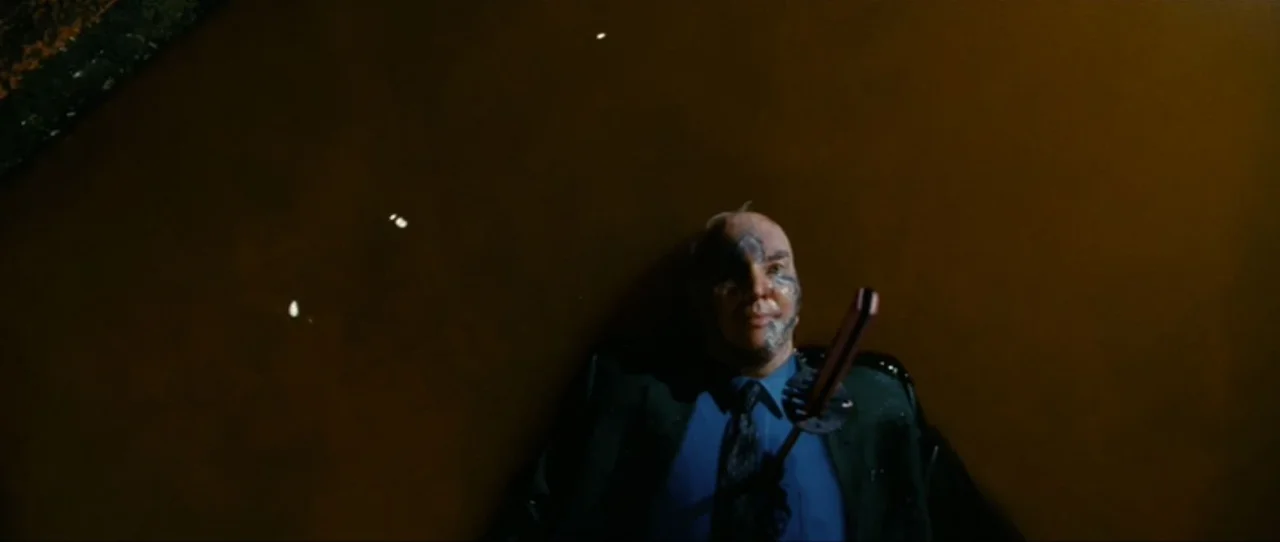
Digital Domain's roster is a tour of early-2010s VFX craft. The reveal of Zartan's true face beneath the President's, achieved by cutting his skin to expose self-repairing nanomites, reused the digital head-replacement technology built for The Curious Case of Benjamin Button and TRON: Legacy, morphing Jonathan Pryce into Arnold Vosloo down to the meniscus of the eye. The film's ICBM explosion was, at the time, the single biggest simulation in the studio's history: one continuous Houdini gas solve topping a billion voxels, referenced from real Peacekeeper missile footage. Firefly's motorcycle was LIDAR-scanned and rigged to break apart into a swarm of missiles in slow motion, and Roadblock's duel with three Cobra HISS tanks was built from a real working tank, scanned and relit shot by shot.
Method Studios staged the night Apache ambush that wipes out the Joes, building two versions of the desert camp, one pristine and one to be destroyed, and delivering CG helicopters, tracer fire and full night-vision views. Method also modeled Firefly's signature explosive robotic fireflies down to the tiny servos operating the irises of their eyes. The entire film was shot in 2D and converted to 3D in post by Stereo D, the conversion that had triggered the delay, and which Paramount said cost only about 5 million dollars; roughly 45 percent of the film's eventual gross would come from 3D screens.
The Original Joe and a Recast Cobra

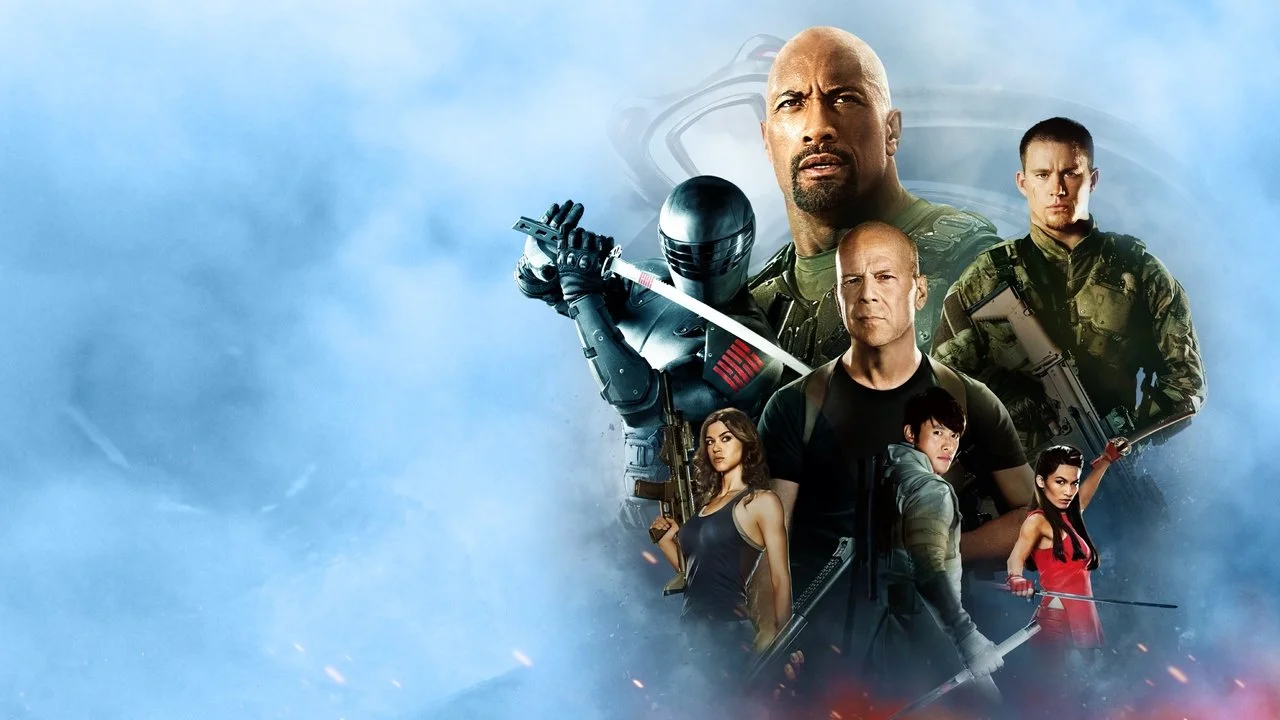
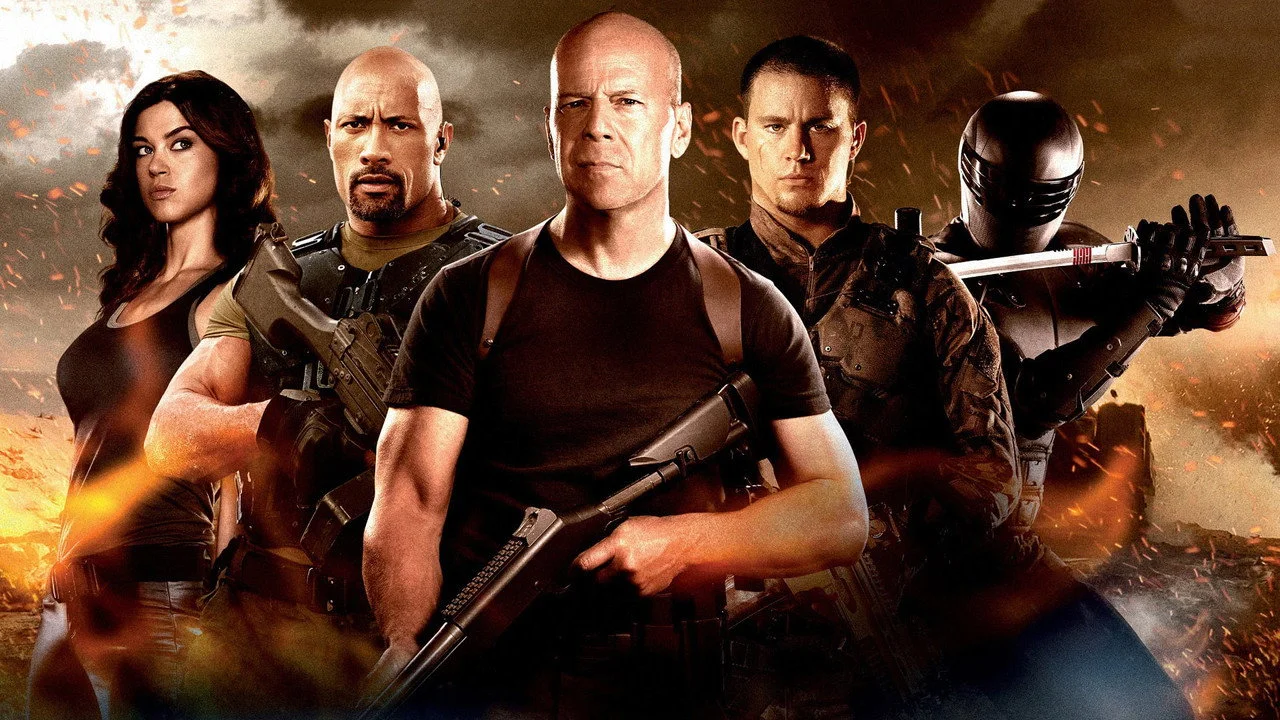
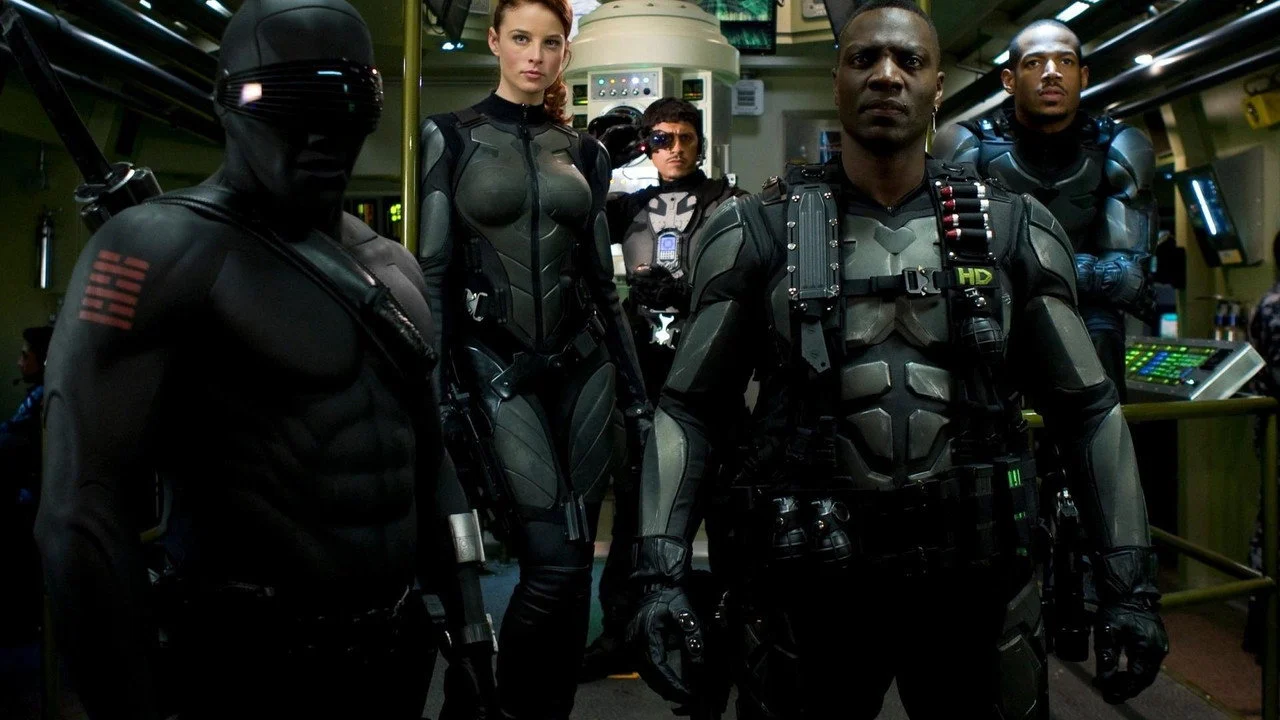
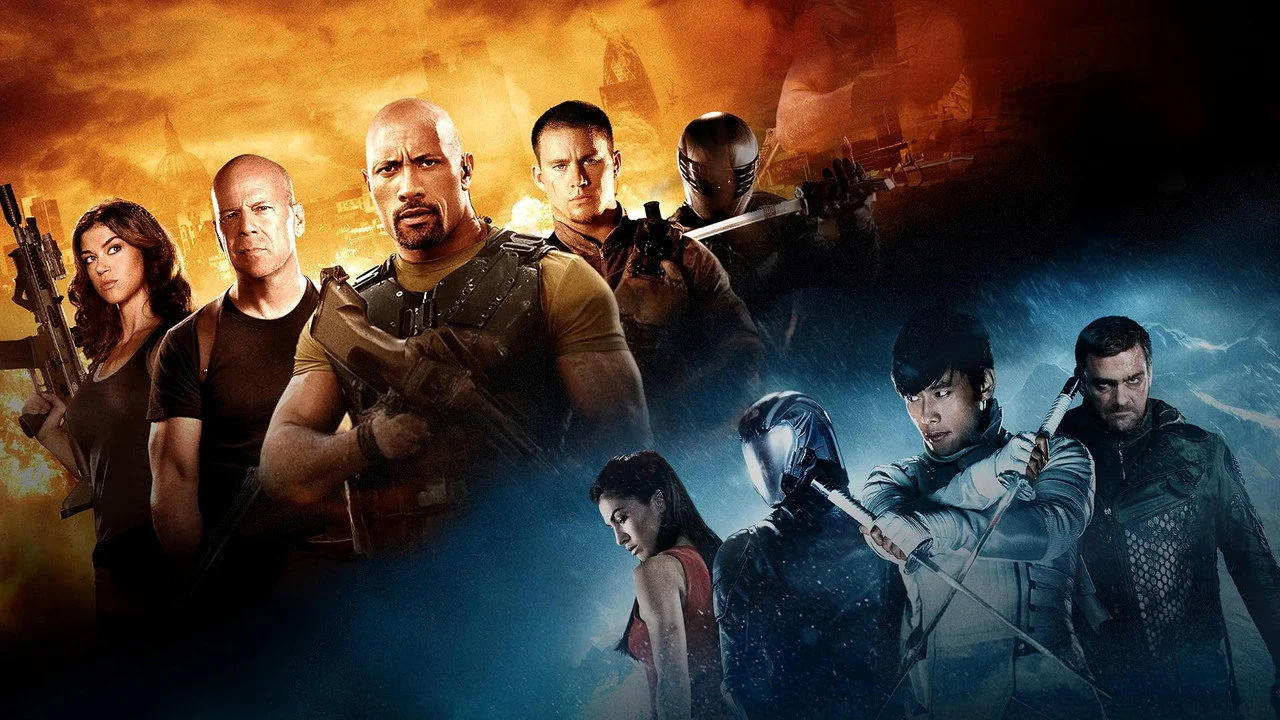
Bruce Willis joining as General Joseph Colton, 'the original G.I. Joe,' was the reboot's other marquee stroke. The role nearly went to the real-world wrestler Sgt. Slaughter, a G.I. Joe icon, until a toy-rights conflict between Hasbro and Mattel blocked it, and Colton was written in his place. Around Willis and Johnson, the team filled out with Adrianne Palicki's Lady Jaye, who cracks the impostor-President plot, D.J. Cotrona's Flint, and the returning Ray Park as Snake Eyes.
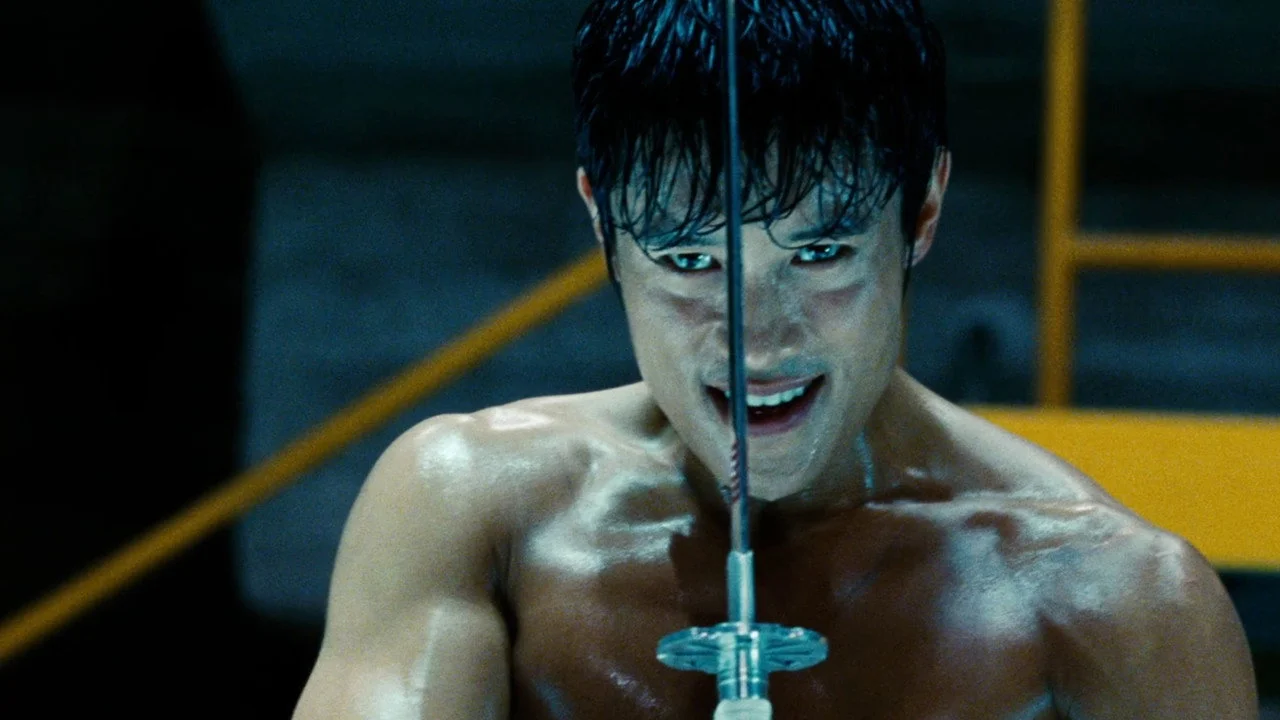
On the Cobra side, the recasting was heavier. Joseph Gordon-Levitt, who had played Cobra Commander as Rex Lewis in the first film, was busy with The Dark Knight Rises, so the masked Commander was played on screen by Luke Bracey and voiced, uncredited, by Robert Baker. Christopher Eccleston did not return as Destro, who is reduced to a brief imprisoned cameo. The most interesting arc belongs to Byung-hun Lee's Storm Shadow, revealed to have been framed by Zartan for murdering his own uncle, the Hard Master, and secretly working to destroy Cobra from within; he defects, kills Zartan, and avenges his master. Ray Stevenson's Firefly, an ex-Joe turned Cobra demolitions expert, and RZA as the blind leader of the Arashikage round out a deep ensemble. RZA, whose Wu-Tang roots are steeped in kung-fu cinema, reportedly asked Hasbro for a flying guillotine for his action figure.
The Sound of Retaliation
With Sommers gone, so was composer Alan Silvestri. In came Henry Jackman, a protege of Hans Zimmer's Remote Control stable, who pushed the franchise's sound toward a modern hybrid of a roughly 100-piece orchestra layered with heavy synthesis, electric guitar and rock percussion. Jackman pointedly quoted none of Silvestri's first-film themes, building fresh material: a heroic Joes theme in 'Honor Restored,' Eastern colour for the Arashikage in 'Storm Shadow,' and villain cues for 'Firefly' and 'Zartan.'
The soundtrack album arrived on Varese Sarabande, digitally on March 19, 2013 and on CD that April, nineteen tracks running just under an hour. The session players were a rock-and-session who's who, including Aerosmith's Joe Perry on guitar and drummers Josh Freese and Vinnie Colaiuta. The marketing leaned elsewhere for its needle drops; the 2012 trailer was cut to Lupe Fiasco's 'Little Weapon.'
Marketing Whiplash
The delay turned the marketing campaign into one of the more expensive misfires of the era. Paramount had already run a Super Bowl XLVI spot in February 2012, with Johnson, Cobra flags flying over the White House, and a machine-gun-toting Bruce Willis, all selling a June date the studio then abandoned. As one producer told The Hollywood Reporter of the sunk campaign, 'they eat all of that money.'
Worse, Hasbro had already shipped the tie-in toy line to shelves in May 2012 for a movie that was no longer coming that summer. Figures were pulled where possible, but old stock lingered at Target and Walmart into December, and the line had to be relaunched in February 2013 alongside the new release. The signature image throughout stayed the same: Cobra's banners hanging over a captured White House, the Zartan-as-President hook that gave the film its hard, paranoid edge. A four-part IDW prequel comic filled in the gaps for fans.
Box-Office Redemption

When it finally opened on March 28, 2013, the gamble paid off where it counted. Retaliation took about 10.5 million dollars on its opening day and 40.5 million across its first weekend at number one. That was actually down roughly 14 percent from the first film's 54.7 million debut, but the back half and the overseas leg were a different story. China alone delivered around 33 million dollars on opening, the single biggest foreign market, vindicating the 3D conversion.
The film finished with about 122.5 million dollars domestically and 253.2 million internationally, for 375.7 million worldwide. That comfortably beat The Rise of Cobra's 302.5 million and made Retaliation the highest-grossing film of the live-action G.I. Joe series, a record it still holds. It was proof that the international, 3D-forward strategy worked even when the domestic opening came in softer than its predecessor.
What the Critics Said
The reviews split hard from the audience. Retaliation holds a 29 percent approval rating on Rotten Tomatoes across roughly 180 reviews, with a consensus that reads: 'Though arguably superior to its predecessor, G.I. Joe: Retaliation is overwhelmed by its nonstop action and too nonsensical and vapid to leave a lasting impression.' Metacritic landed at 41. Yet audiences gave it an A-minus CinemaScore, one of the widest critic-versus-crowd gaps of the year.
The praise, where it existed, went almost entirely to the mountain duel. The A.V. Club admired Chu's 'elegant marshaling of digital effects, particularly in a sequence where the Joes engage in a little kung- and wire-fu around a Himalayan monastery,' and The Hollywood Reporter called the cliff fight a 'dazzling sequence' that was 'like Spider-Man times 10.' The pans were merciless. Richard Roeper, reviewing for RogerEbert.com, gave it a star and a half and called it 'a heavy-handed, explosion-riddled, ear-piercing disaster with an insanely stupid plot,' likening it to 'a Dumpster bin behind Tiffany's' and signing off with a single word: 'Sucks.' Variety's Justin Chang dismissed it as 'a more straight-faced brand of idiocy than its cheerfully dumb 2009 predecessor,' noting that London's destruction is 'tossed off in quick, almost ho-hum fashion.' Empire summed up the divide: the film 'wears the lightness of its premise like a lead vest.' Notably, for all the vitriol, it earned zero Razzie nominations.
29 percent from critics, an A-minus from audiences. The widest split of the year, and the mountain duel is the reason both numbers exist.
Legacy

Retaliation remains the commercial high-water mark of the live-action G.I. Joe films and, for many fans, the better-crafted of the two on pure action merit. Its cliff-face ninja duel is still the sequence the franchise is measured against, the rare set piece that even hostile critics concede is genuinely great.
It was also, quietly, the end of the line for the G.I. Joe team on screen. A third film spent years in development, attached to Chu, then D.J. Caruso, retitled Ever Vigilant, with Roadblock assembling a new squad against the Cobra twins Tomax and Xamot. It never shot, stalled largely by Dwayne Johnson's exploding schedule, and its release slot was eventually handed to a reboot. That reboot, 2021's Snake Eyes, abandoned the Retaliation continuity entirely and flopped hard, grossing under 40 million dollars and effectively ending near-term plans for Joe features. Hasbro's wider shared-universe ambitions fizzled too.
So Retaliation stands as the last true G.I. Joe team movie, the one that delivered a passing of the torch to Roadblock that the franchise never got to follow up. Everything after it either died in development or died at the box office, which only sharpens its standing: the high point of the live-action era, anchored by a nine-minute fight on the side of a mountain that nobody has topped.
Trailers & Clips
Official footage plays from YouTube in privacy-enhanced mode.
Did You Know
- The nine-minute Himalayan cliff duel is a direct homage to Larry Hama's celebrated silent comic, G.I. Joe issue 21, 'Silent Interlude' (1984).
- Director Jon M. Chu blocked out the entire mountain fight using couches, chairs, lamps and Hasbro ninja toys, with a real mountain climber advising where rope anchors should go.
- The film was pulled from its June 2012 date barely five weeks before release and delayed nine months, officially for a 3D conversion.
- Test screenings had come back 'mediocre to bad,' and Paramount reshot about a week with Channing Tatum to build the Duke and Roadblock friendship before Duke's death.
- Channing Tatum has said he asked to be killed off early because he did not enjoy making the films.
- Bruce Willis's General Colton replaced a planned Sgt. Slaughter role, blocked by a Hasbro and Mattel toy-rights conflict.
- Cobra Commander was played on screen by Luke Bracey and voiced, uncredited, by Robert Baker, after Joseph Gordon-Levitt left for The Dark Knight Rises.
- The mountain battle's green-screen stage was inside NASA's Michoud Assembly Facility, the building once used to build Space Shuttle external fuel tanks.
- Roughly 45 percent of the film's worldwide gross came from 3D screens, vindicating the much-mocked delay.
- The ICBM explosion was the largest single simulation in Digital Domain's history at the time, a continuous solve topping one billion voxels.
- Colton hands Roadblock an M1911 pistol said to have belonged to General Patton, fired once in tribute to the fallen Joes.
- A Best Buy 'Extended Action Cut' on home video added roughly 12 minutes, including more of the finale and a longer Storm Shadow versus Zartan clash.
- The film was banned in Pakistan over its portrayal of the country.
Gallery
Quick Facts
- Released
- March 28, 2013
- Format
- LIVE-ACTION
- Director
- Jon M. Chu
- Studio
- Paramount Pictures
- Runtime
- 110 min
- Starring
- Dwayne Johnson, Channing Tatum, Bruce Willis, Adrianne Palicki, Byung-hun Lee, Ray Park, Ray Stevenson, D.J. Cotrona, Elodie Yung, Jonathan Pryce, RZA
- Budget
- $130-155M
- Box office
- $375.7M
- Awards
- Highest-grossing film in the live-action G.I. Joe series
Sources: Wikipedia; Deadline (Nikki Finke); The Hollywood Reporter; Variety; fxguide; The Art of VFX (Bill George/ILM); Box Office Mojo; The-Numbers; Rotten Tomatoes; Metacritic; RogerEbert.com; A.V. Club; Empire; Filmtracks; Varese Sarabande; Collider; AWN; Joepedia.