
Comic Art Dossier · DOS-021
The $312,000 Silent Cover
Snake-Eyes' first solo cover, from the comic that told its greatest story without a single word.
The lot
One cover, three hundred and twelve thousand dollars.
On 13 January 2022, at Heritage Auctions in Dallas, the original art to the cover of G.I. Joe: A Real American Hero #21 sold for $312,000. It became, at that moment, the most valuable piece of original G.I. Joe comic art ever sold at public auction. Forty seven bidders and registered phone bidders chased it. The lot page logged better than nine thousand views before the hammer fell.
What sold was not the printed comic. It was the board: ink, white paint, and Zipatone laid over graphite and blue pencil on Marvel cover stock, with an image area of 9.75 by 15 inches. It carries an acetate overlay with the stat logo and header, staple holes in the top margin, editor's notes in the side margins, and a small piece missing from the bottom right corner. Heritage graded it Very Good. Old production art is a working document, not a gallery piece, and the wear is part of the provenance.
The team signed it under the UPC box. Ed Hannigan signed inside the box itself. In the lower left corner, editor in chief Jim Shooter added his name. Those signatures, on a cover this recognizable, are a large part of why a forty year old piece of work-for-hire art outran the price of a house.
The cover
Why this is the one.
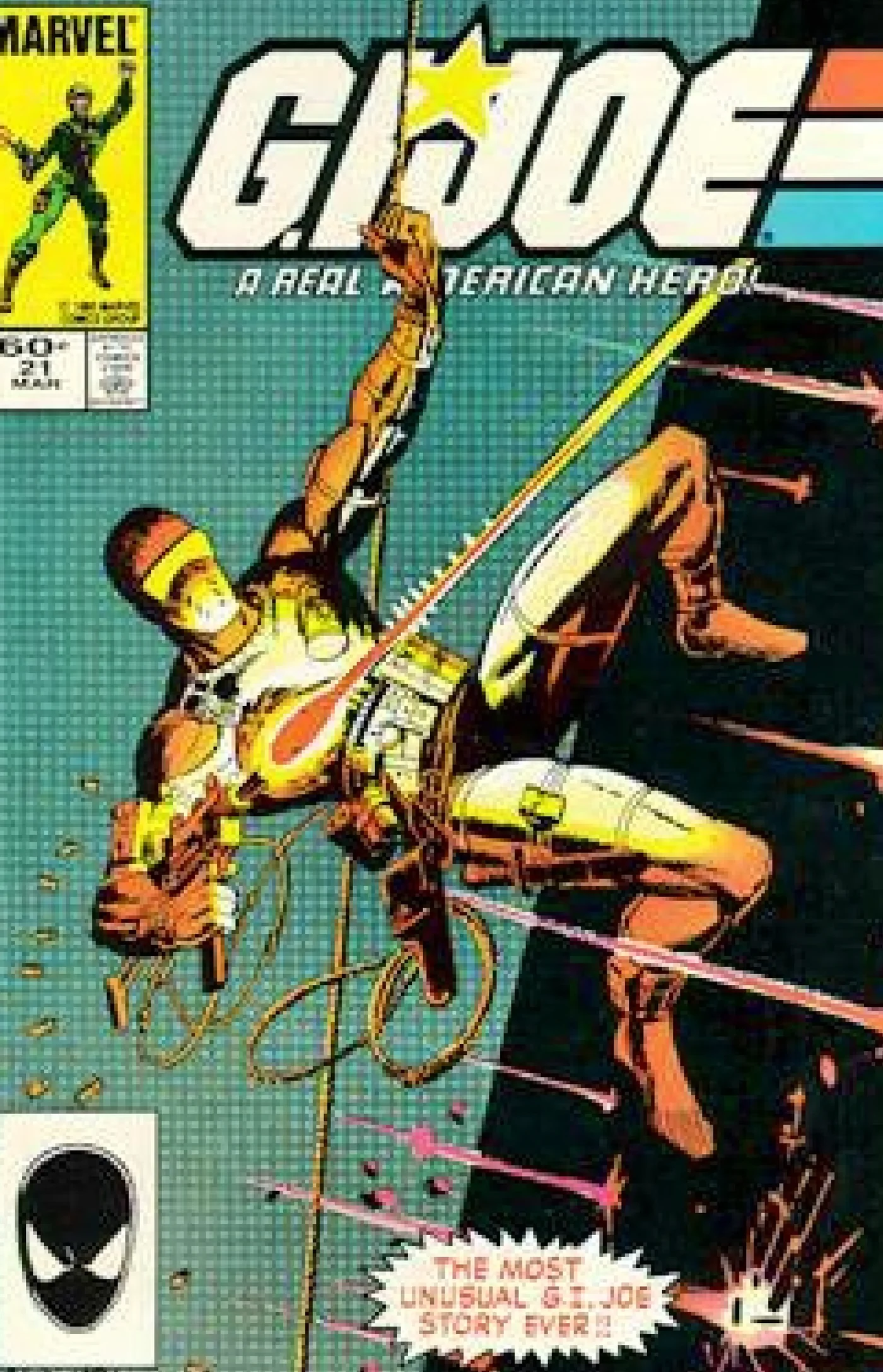
By early 1984, Snake-Eyes had stolen the book. He was the commando who did not speak, did not show his face, and did the impossible quietly. Issue #21 gave him the cover by himself for the first time, and the image earns it. He is mid-leap, sword out, framed tight against Cobra red, the whole composition leaning into motion. There is no team shot, no logo clutter fighting the figure. It reads in a quarter second from across a spinner rack, which is exactly what a cover is supposed to do.
A note on credit, because collectors care and the sources do not fully agree. Heritage catalogues the art as Ed Hannigan and Klaus Janson, the production stat block inked onto the board itself reads "ARTIST Hannigan Janson," and the piece is signed by the team with Hannigan inside the UPC box. Some fan databases instead credit the cover layout to Larry Hama, who wrote and laid out the issue inside. What no source disputes is the finish. The brush line you see, the weight of the blacks, the snap of the figure against the background, that is Klaus Janson.
The silent issue
Larry Hama's "Silent Interlude."
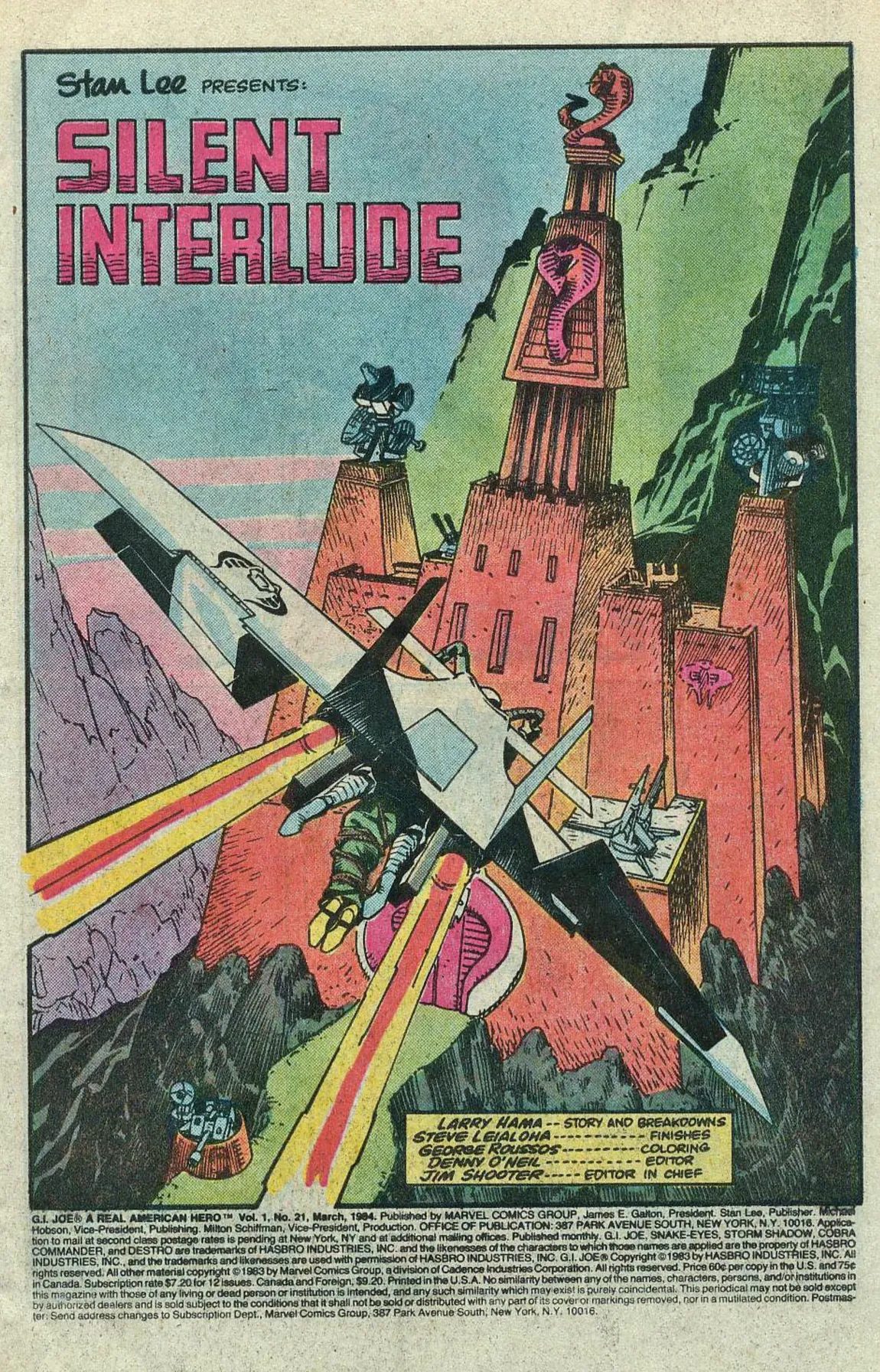
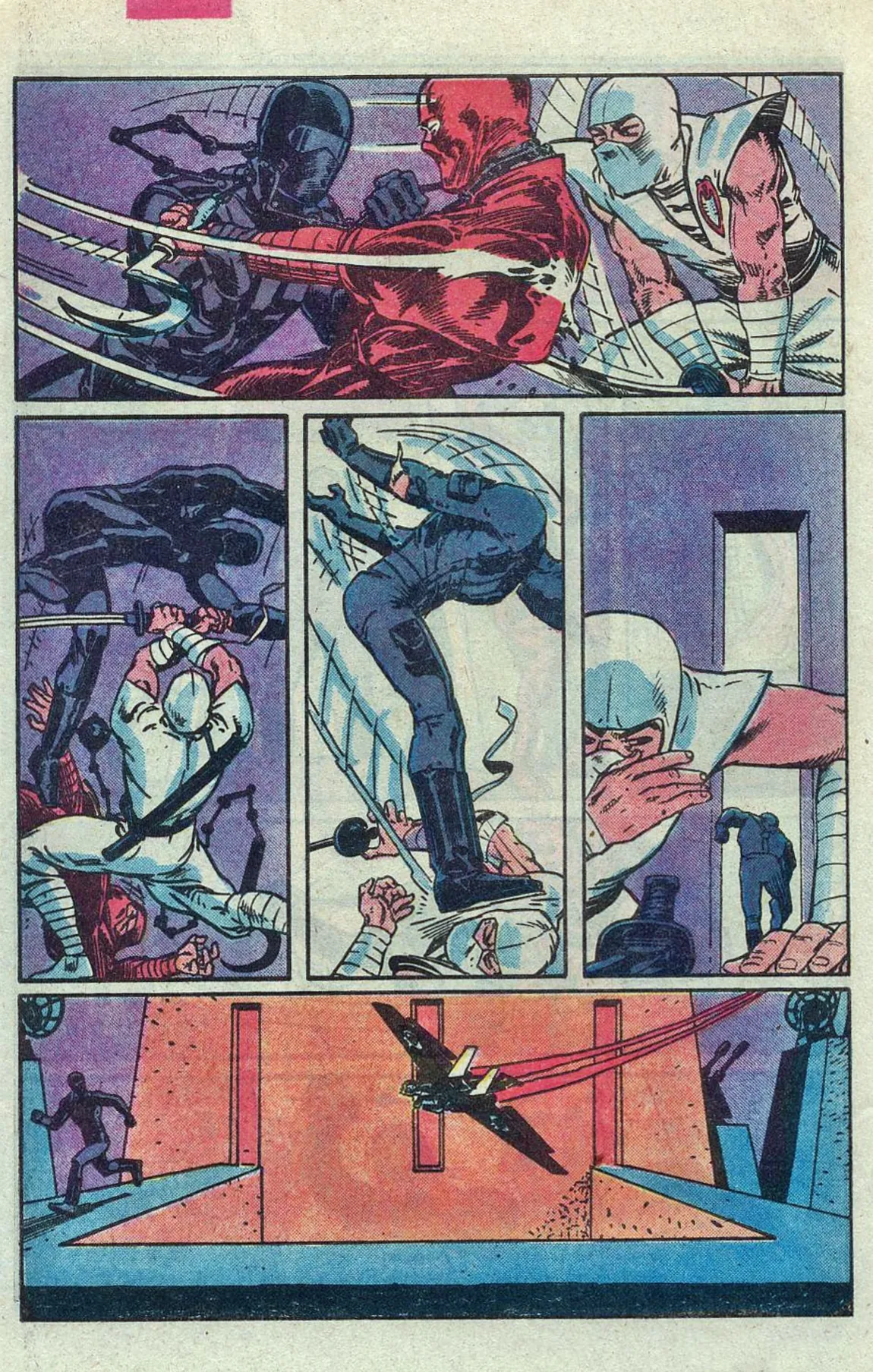
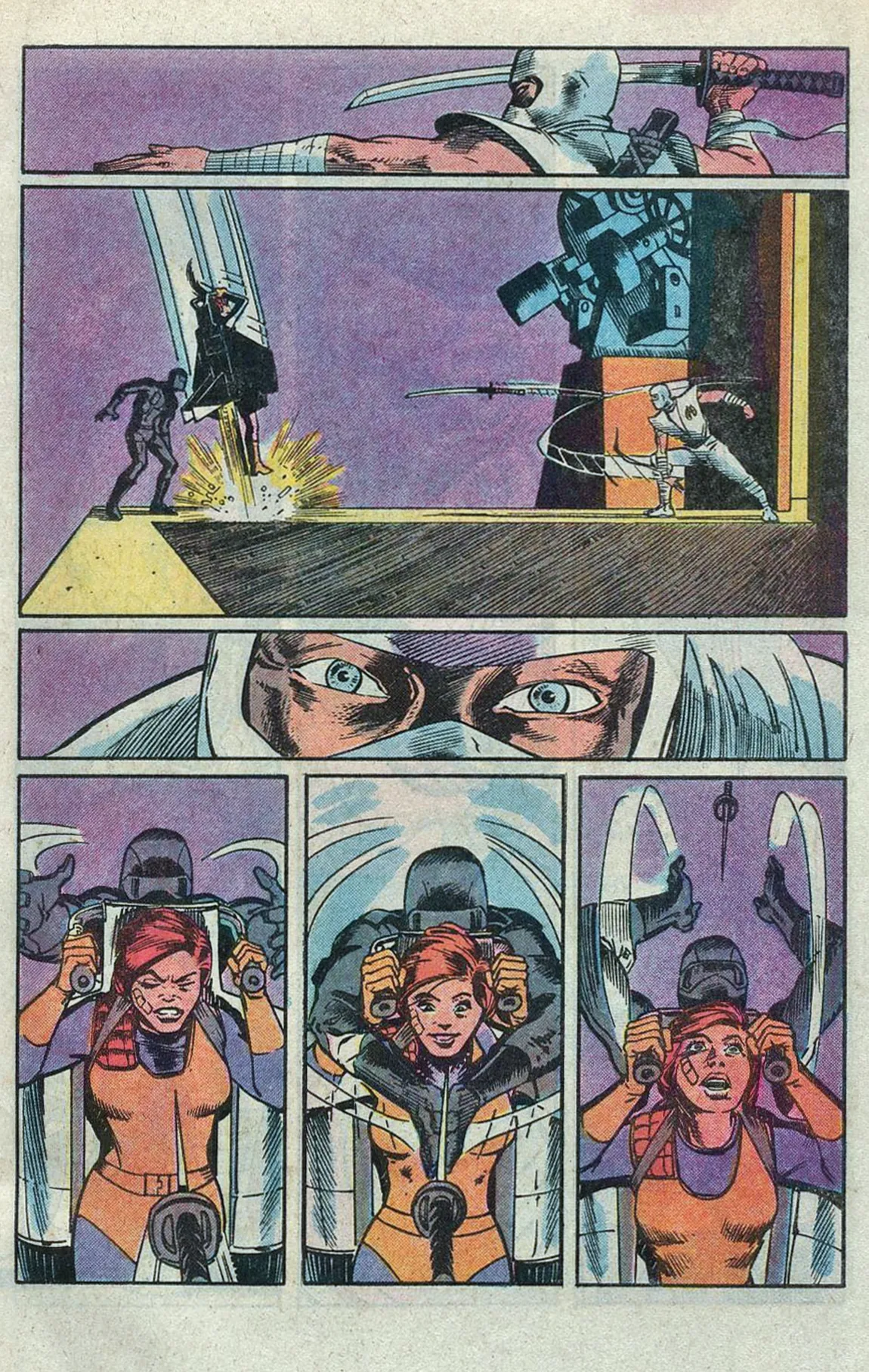
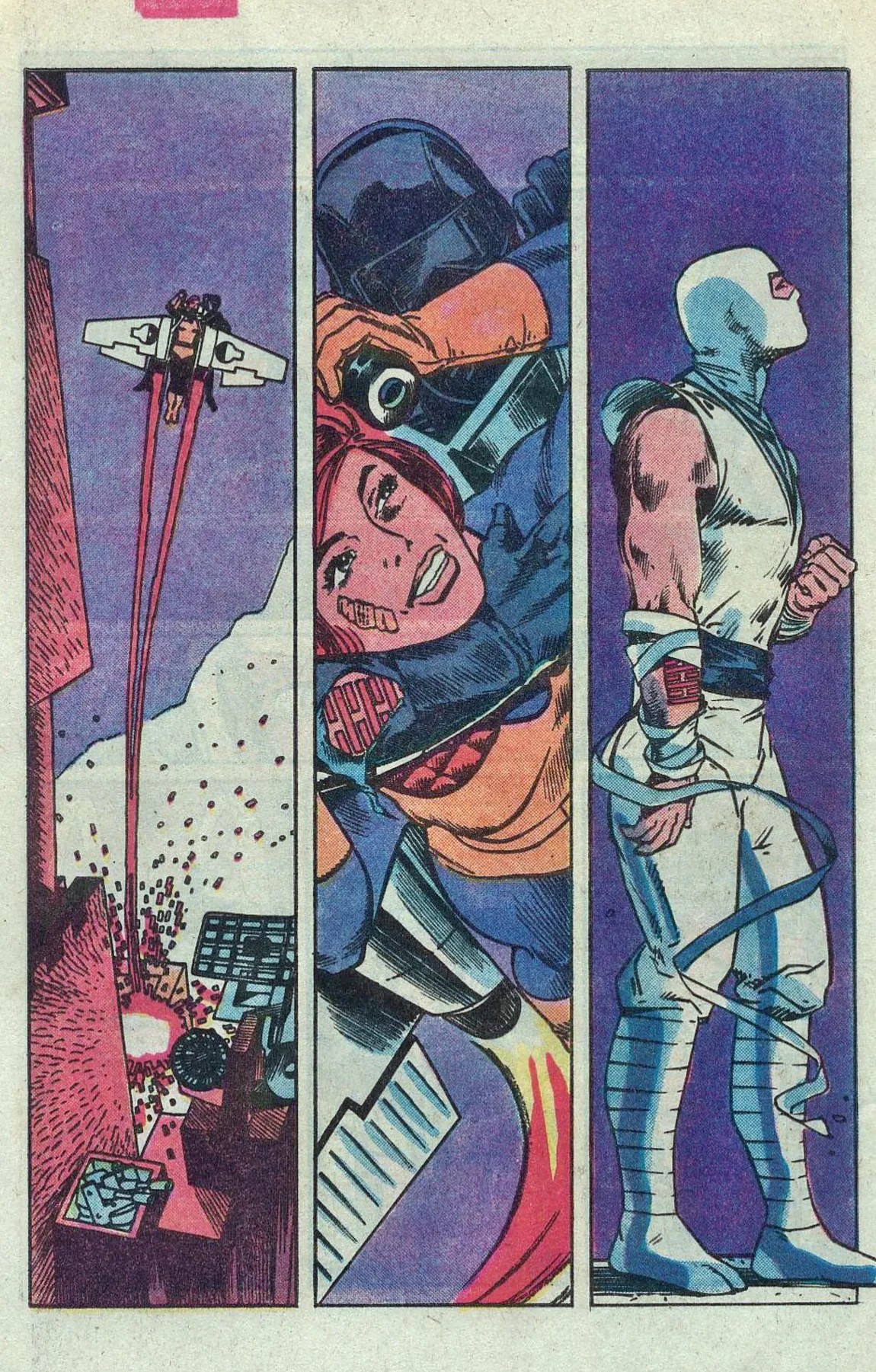
G.I. Joe #21, March 1984. Story and breakdowns by Larry Hama, finishes by Steve Leialoha, colors by George Roussos, edited by Dennis O'Neil. Not one word balloon. Not one caption. Not one sound effect.
The plot is simple and the execution is not. Storm Shadow flies a wrapped prisoner into Cobra's mountain stronghold. It is Scarlett. Outside, a C-130 opens its ramp in the moonlight and Snake-Eyes drops toward a castle that radar says cannot be reached from the air. He gets in anyway. He clears the roof, fights through Storm Shadow's red ninjas, and reaches Scarlett as she frees herself. They escape together. On the last page, with no fanfare and no dialogue, Hama shows the two warriors carrying the same tattoo. That single panel turned a one off rescue into the Snake-Eyes and Storm Shadow saga that ran for the next decade.
It is routinely named the best single issue of the series and one of the most influential mainstream comics of the 1980s. A generation of writers and artists points to it as proof that comics can carry a full action story on staging and choreography alone. It has been reprinted on its own, recolored for anniversaries, and answered by an all silent revival decades later. The cover above is the front door to all of it.
The cover team
Two service records.
The names on the board belong to two of the most quietly important craftsmen of their generation. Neither is a household name. Both are on shelves in every comic shop in the country.
Ed Hannigan
Born 1951
ON #21 Cover pencils and breakdowns. Signed inside the UPC box.
Co-creator of Cloak and Dagger (Spectacular Spider-Man #64, 1982). One of the most prolific Marvel and DC cover designers of the era, including a long Batman cover run from 1983 to 1985, the first ongoing Green Arrow, and a writer-artist stretch on The Defenders.
In 2010 Marvel and The Hero Initiative published "Ed Hannigan: Covered" to support him through multiple sclerosis. The cover community turned out in force.
Klaus Janson
Born 1952, Coburg, West Germany
ON #21 Inks and finishes. The line you see on the stands.
Frank Miller's inker on Daredevil, including Elektra's debut in #168 (1981), and inker and colorist on Batman: The Dark Knight Returns (1986). A working artist and longtime teacher at the School of Visual Arts, with Eisner, Harvey, and Inkwell honors.
Every source agrees Janson finished this cover. He also inked the very next G.I. Joe cover, #22, the month after.
Read it yourself
The art is in a vault. The story is five dollars.
You are not going to out-bid a $312,000 collector for the board. You can absolutely own the comic. Reading copies of the printed #21 turn up constantly, and the silent story has been collected and reprinted more than once.
gijoe.army may earn a commission on qualifying purchases made through links on this page.
Talk Silent Interlude in the barracks
Share your thoughts, memories, and collector finds with the G.I. Joe Army community at our forums.
Cover and interior page scans mirrored from the Internet Archive scan of G.I. Joe: A Real American Hero #21 (Marvel, March 1984), presented here for commentary and historical documentation. G.I. Joe, all characters, and the cover and interior artwork are trademarks and copyright of Hasbro and Marvel. Auction data and the two original-art photographs are reproduced from the public auction archive at Heritage Auctions (heritagestatic.com), sale #7266, lot 91010, closed 13 January 2022, with attribution. Contact us if you are the rights holder and want the entry removed.